
Experience Design Platform for a Branded Adventure Race - Shorthanded & Offshore
DESIGN RESEARCH & INSIGHTS | BRANDED EXPERIENCE STRATEGY | EXPERIENCE DEVELOPMENT & IMPLEMENTATION

Client:
Developed in collaboration with Jurka Mihelin (jurka.si)
The Project Goal
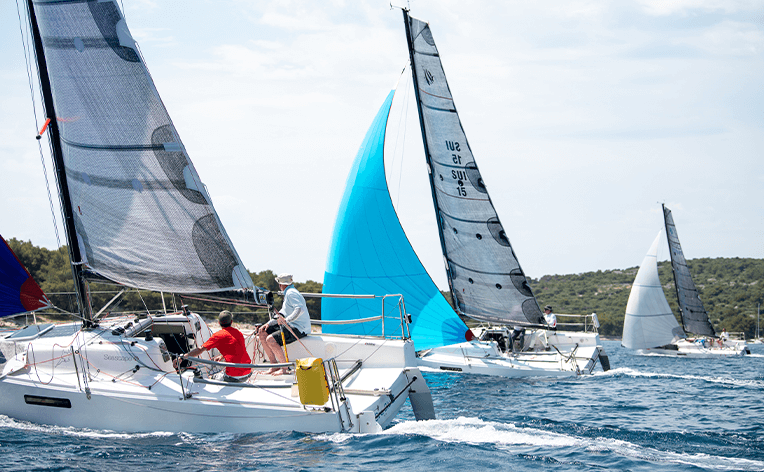
Andraž Mihelin stepped off a Seascape 18 in Svendborg at dusk, having sailed 134 miles of the Silverruder, the world’s largest around a Danish island, and recognised a feeling he thought belonged to ocean racing. He spent the 1,600 km drive back to Slovenia working out how to bring it home.
It didn’t travel directly. The Baltic breeds solo ironmen; the Adriatic does not. And Seascape had a related problem of its own — boats built with offshore DNA, owners sailing them around the cans on Sunday mornings, and a brand that lived in the product rather than in a community of people who sail together.
The goal was an annual race that would become that community: a first taste of long-distance shorthanded racing, demanding enough to mean something and safe enough that an amateur would say yes, belonging to its host village and standing up without a sponsor.
The Approach
Seascape brought the ambition and the sailing judgement. As part of internal service design team we collaborated to make the event evidence-based rather than intuitive, and repeatable.
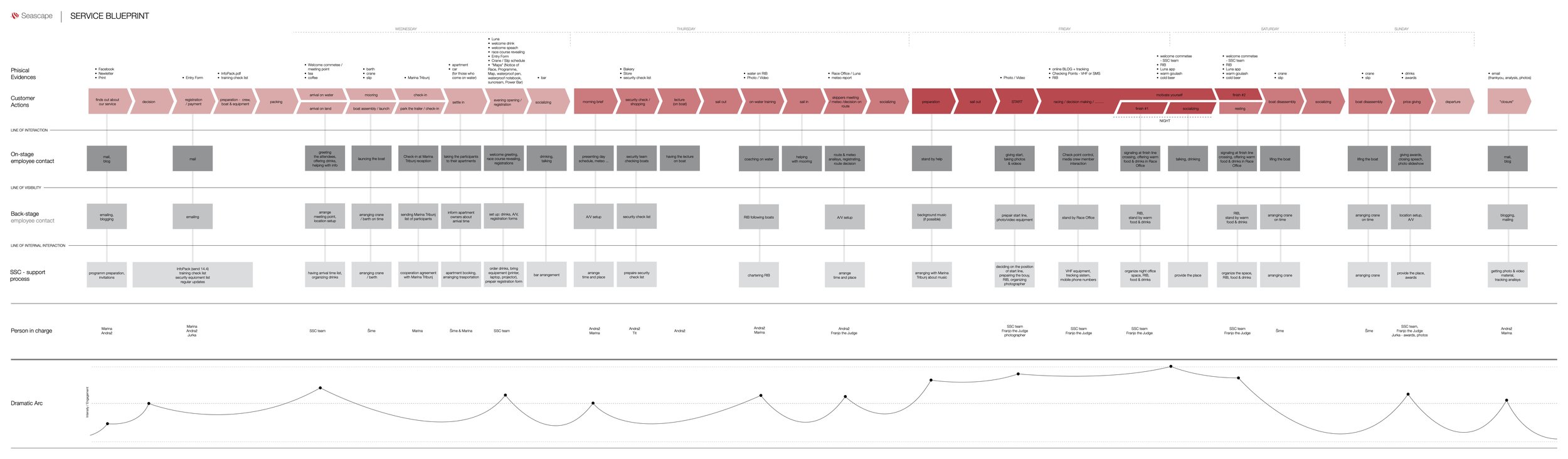
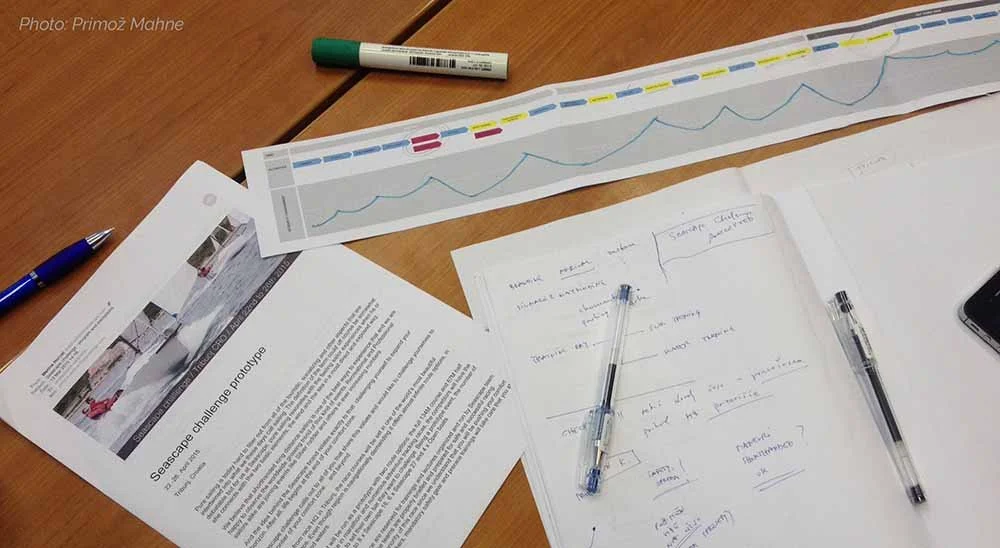
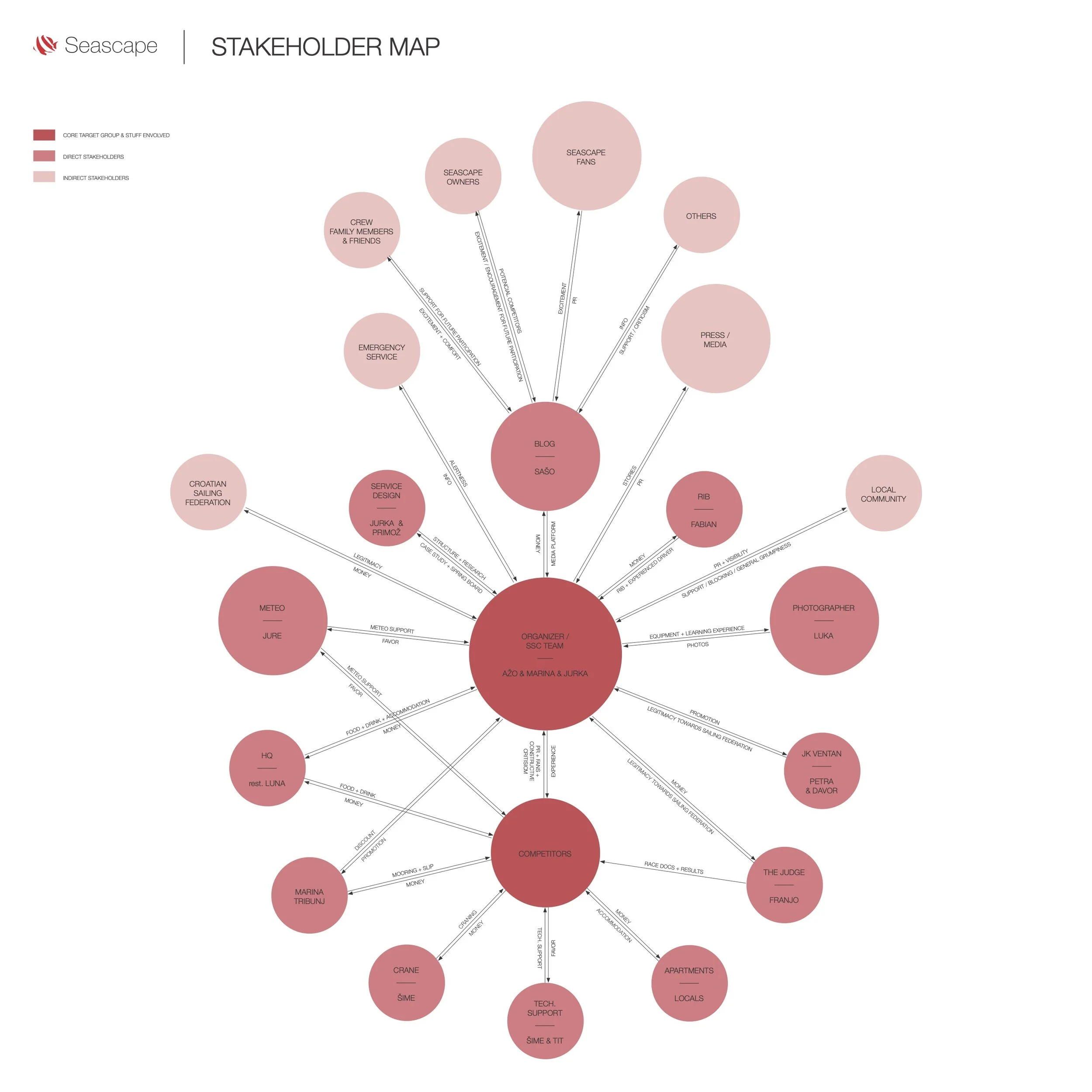
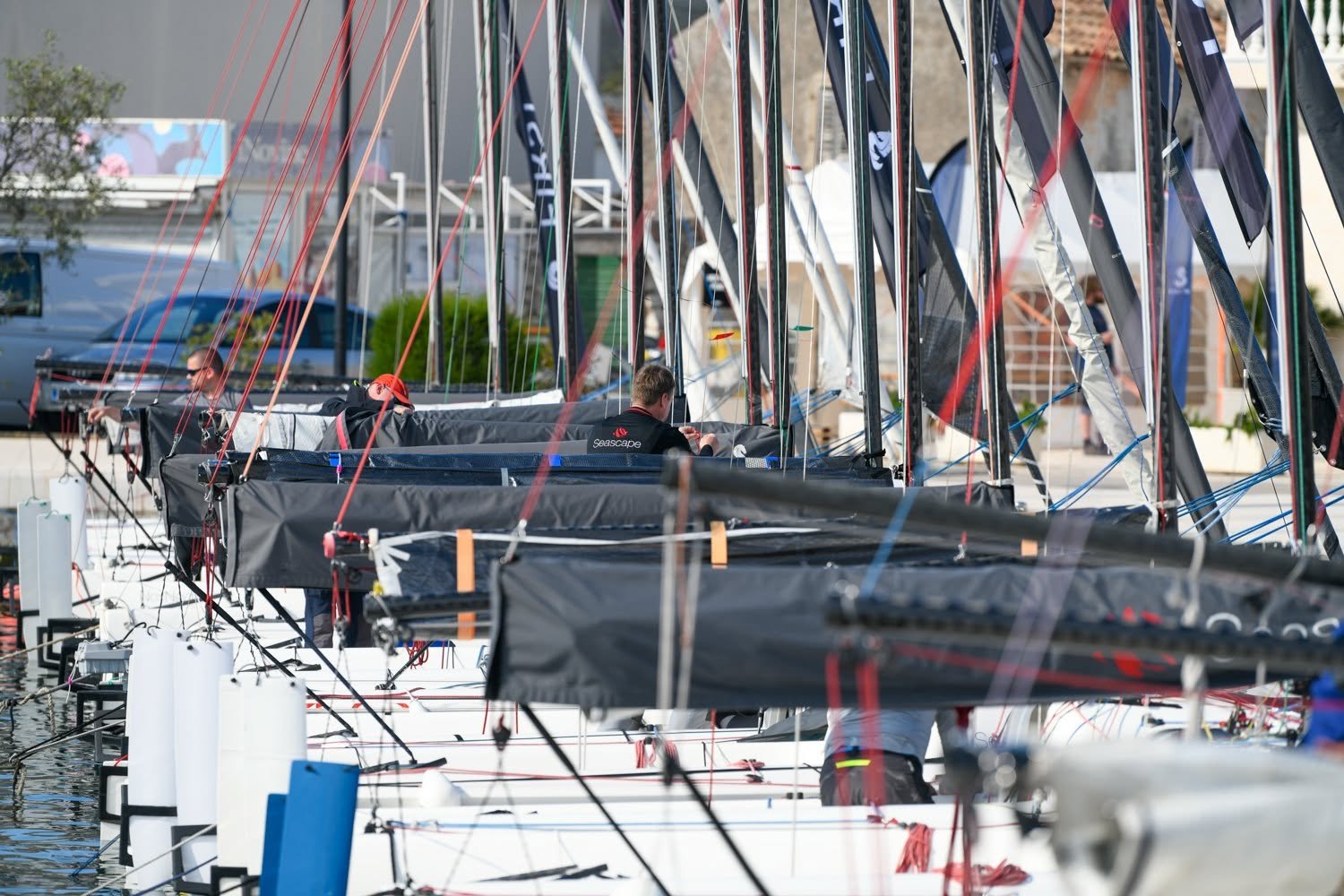
The first edition was built as a prototype and declared as one — participants were told it was research, and why that served them — then designed so the evidence could actually be collected. Interviews with owners and with hosts of comparable races produced three personas and a design brief. A journey map, a dramatic arc and a stakeholder map defined the event and made visible what every party exchanged with every other. A service blueprint then specified the physical evidence, staff actions, backstage processes and a named person responsible for each moment, from the crane booking to the finish-line welcome.
The feedback loop was the part built to outlast the project. An expectation map fixed in advance the touchpoints where organisers have most influence, and satisfaction was measured at those points during the race rather than recalled afterwards. One team member sailed it as a first-timer and wrote up the experience. A participant survey and a team debrief turned everything into a recommended actions list, and every edition closes by producing an upgraded blueprint, task schedule, media plan and equipment list — so each improvement is inherited by the next team instead of rediscovered.
The Outcome
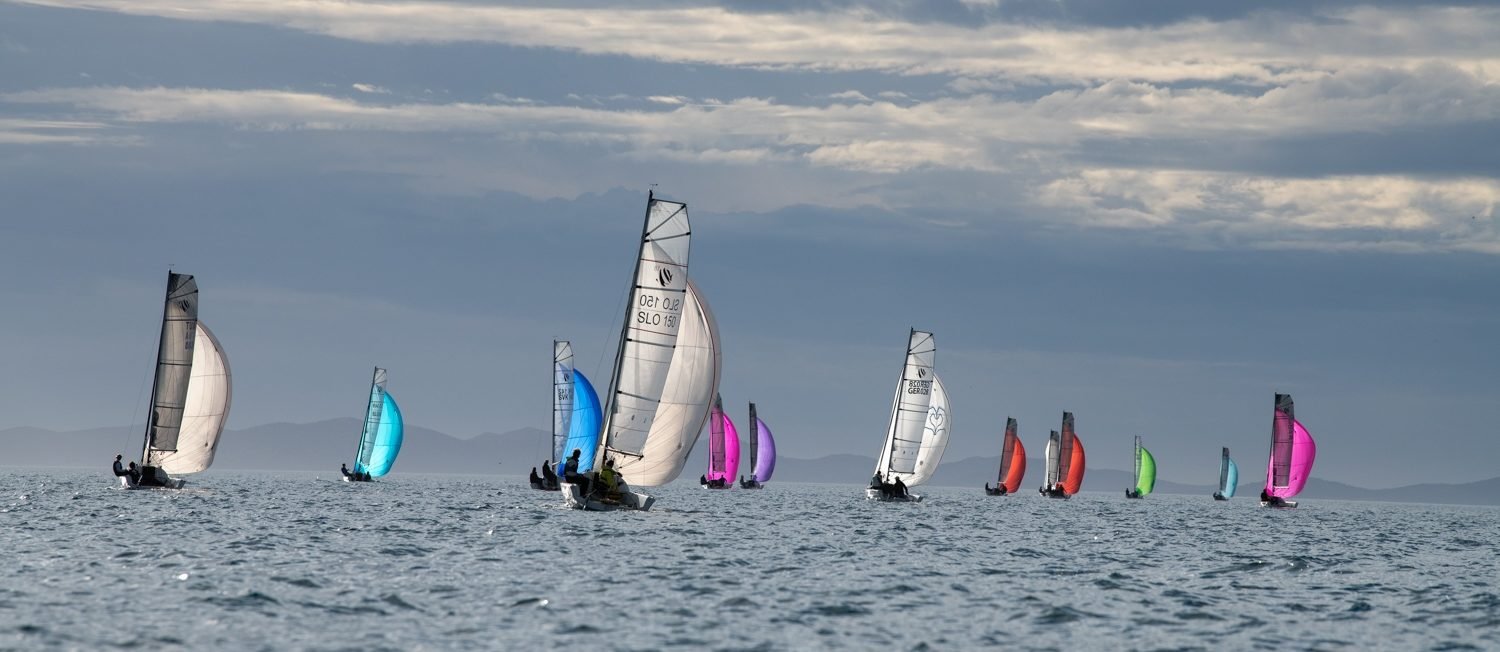
Ten boats from four countries sailed the prototype. Within three years the race had filled its host harbour, with every slot taken inside 24 hours of registration opening, sailors from twelve countries and a waiting list behind them. It has sold out most years since.
Eleven years on it is sailed every spring, now as the First SE Challenge under Beneteau, and still runs on what the blueprint put at its centre: courses set the night before to the forecast, a 24-hour race HQ, live trackers, olive oil in place of trophies, and a host village that treats the fleet as its own.
Because the design was written down rather than carried in people’s heads, it also transferred — the blueprint and the signature-event requirements became the template Seascape used to run and judge its wider event programme.
10 boats
Pilot edition in 2015
70 boats
Sold out in 1 hour in 2025
“Designing an event was just as satisfying as designing a sailboat.”